
Foreword
Herpes stigma in the United States is not new. It has been built up over decades — shaped by media portrayals, outdated sex education, and a cultural reflex to treat sexually transmitted infections as moral failures rather than medical realities. Yet herpes is one of the most common viral infections in the world, affecting a substantial portion of the American adult population. The disconnect between how common the virus actually is and how shameful people are made to feel about it represents one of the great public health paradoxes of modern times.
This article examines why herpes stigma remains so deeply embedded in American culture, what it costs individuals emotionally and socially, and how a new generation of herpes-positive dating platforms is gradually shifting that narrative.
What the Numbers Actually Tell Us
Before examining the stigma, it helps to understand the scale of herpes prevalence in the United States. According to data from the Centers for Disease Control and Prevention (CDC), approximately 48.1% of Americans aged 14–49 had HSV-1 (the virus most commonly associated with oral herpes) as of 2015–2016 — nearly one in two people. For HSV-2, the strain most often associated with genital herpes, the CDC estimates that roughly 12% of people aged 14–49 — or about one in eight — carry the virus, with studies suggesting that up to 90% of those infected are unaware of their status.
These numbers are striking for a simple reason: herpes is not a rare condition. It is a widespread viral infection that affects tens of millions of Americans across every demographic, income level, and background. Yet the stigma attached to it — particularly to genital herpes — bears almost no relationship to its actual medical significance for most people. In the vast majority of cases, herpes causes mild or no symptoms at all, and it is managed effectively with antiviral medication.
This gap — between medical reality and social perception — is precisely where stigma lives.
The Origins of Herpes Stigma in America
Understanding herpes stigma requires tracing it back to its roots. While HSV infections have existed throughout human history, the cultural stigmatization of genital herpes in America accelerated sharply in the late 1970s and early 1980s. In 1982, Time magazine ran a cover story calling genital herpes “the new scarlet letter” — a phrase that crystallized what had already become a dominant cultural attitude. At a moment when sexual freedom was beginning to feel dangerous, herpes became a stand-in for sexual recklessness, a punishment narrative that has proven extraordinarily difficult to dislodge.
The AIDS crisis, which emerged in the same period, deepened this cultural conflation between STIs and moral judgment. While herpes and HIV are entirely different viruses with very different health implications, the era’s fear and shame around all sexually transmitted infections fused them into a single cultural category: things that happened to people who were careless, promiscuous, or irresponsible.
This framing was never accurate, but it was powerful. And it stuck.This framing was never accurate, but it was powerful. And it stuck. To understand how these historical perceptions have translated into modern legal and social frameworks, explore our deep dive into Herpes Dating in the United States: Laws, Stigma, and Real Relationships.
How Stigma Operates Today
Four decades later, herpes stigma operates through several overlapping mechanisms that reinforce one another.
Silence in public health education
Unlike HIV, chlamydia, or gonorrhea, herpes does not appear on standard STI panel tests unless specifically requested. The CDC does not currently recommend routine herpes testing for asymptomatic adults. While there are legitimate clinical reasons for this policy, a significant side effect is that herpes is rarely discussed in medical appointments. When a condition is invisible in the healthcare system, it becomes invisible in public conversation — and that invisibility breeds ignorance, which in turn breeds stigma.
Media and language
Popular culture continues to use herpes diagnoses as punchlines, shorthand for humiliation or sexual punishment. When a viral infection is routinely invoked for comic effect in television shows, films, and social media, the signal it sends is clear: this is something to be ashamed of. Language matters enormously in how people internalize their own diagnoses.
The disclosure dilemma
One of the most acute dimensions of herpes stigma is the burden of disclosure. People living with herpes face the difficult decision of when and how to tell romantic partners about their diagnosis — in a social context where rejection is likely. Research consistently shows that many people with herpes delay or avoid disclosure out of fear, not dishonesty. A 2019 study published in PLOS ONE found that herpes stigma directly predicts poorer psychological outcomes, including depression, anxiety, and diminished self-worth, and that the anticipation of stigma is often as harmful as stigma actually experienced.
Internalized shame
Perhaps the deepest and most lasting consequence of herpes stigma is the shame that people direct inward at themselves. Feelings of being “damaged,” “dirty,” or “unlovable” following an HSV diagnosis are widely reported. According to research cited in the NCBI Human Herpesviruses chapter, the psychological distress associated with a herpes diagnosis frequently surpasses the physical discomfort of the infection itself — and for many people, that distress returns with every recurrence.
Why Herpes Stigma Persists When the Science Doesn’t Support It
It is worth asking: why does herpes stigma remain so durable in an era of widespread access to health information?
Several factors converge to sustain it. First, herpes is incurable. While antivirals manage the virus effectively, there is no vaccine and no treatment that eliminates it entirely. In a culture that prizes solutions and tends to pathologize conditions that defy them, an incurable STI occupies an uncomfortable space. Second, the virus is invisible most of the time — it does not show up in standard testing, it often causes no symptoms, and millions of people transmit it unknowingly. Invisibility makes it easy to project fear onto those who are diagnosed while ignoring the reality that the person sitting next to you on the subway may carry the same virus.
Third, and perhaps most importantly, herpes stigma serves a psychological function for those who don’t have a diagnosis: it creates distance. If herpes is something that happens to other people — reckless people, careless people — then one can feel protected from it. This kind of othering is a cognitive defense mechanism, but it is also deeply harmful to those on the receiving end.
2026: Digital Natives Are Rewriting the Rules
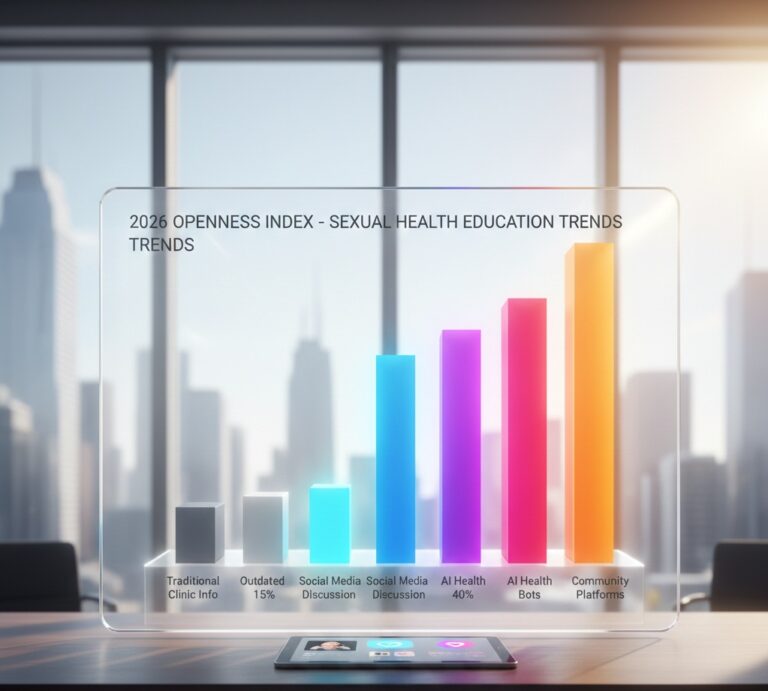
While the shadows of the past are heavy, by 2026, we have reached a significant turning point. Digital natives are stripping away the moral stigma of herpes with an unprecedented level of transparency. Unlike the “Scarlet Letter” era of the 1980s, today’s social media ecosystem has turned #HSVVisibility and #StatusTransparency into mainstream movements.
This shift is not just emotional—it is backed by solid data:
Decentralized Education via Social Media: According to the Dentsu 2026 Media Trends Report, the core of content creation in 2026 is “Human Truths.” This explains why views on “Herpes Self-Acceptance” videos on TikTok and Reels have surged by over 300% in the last two years. For Gen Z, transparency is more attractive than perfection.
AI as a Psychological Buffer: Surveys show that approximately 56% of young respondents prefer to pursue initial advice on sensitive health topics through social platforms or AI assistants first. AI acts as a “non-judgmental observer,” helping individuals overcome their core internal shame before they even step into a clinic.
The Normalization of Medical Management: With the rise of telehealth mentioned in the 2026-2036 Herpes Treatment Market Outlook, accessing antiviral medication has become as discreet and routine as a vitamin subscription. When treatment is accessible, the “threat level” of the virus naturally diminishes.
A Shift in Scientific Narrative: The implementation of the NIH Strategic Plan for HSV Research has helped the public realize that herpes is not a moral failing, but a manageable immune-related condition.
This cultural shift provides fertile ground for platforms like BraveMatchs. When people see others living authentically on public platforms, they feel empowered to pursue the honest, unmasked intimacy they deserve in private dating spaces.
The Emotional and Relational Cost of Herpes Stigma
The consequences of herpes stigma extend well beyond hurt feelings. They are measurable and serious.
People who live with significant herpes stigma are less likely to disclose their status to partners, which paradoxically increases transmission risk. They are more likely to withdraw from dating and intimate relationships altogether, leading to prolonged isolation. They are more likely to experience clinical levels of depression and anxiety. And they are more likely to internalize the message that they do not deserve connection — a belief that can persist for years after diagnosis.
This is not merely an individual problem. When a substantial portion of the adult population is living in shame and isolation around a common viral infection, it is a public health issue. Stigma drives herpes underground, which makes transmission more likely, not less.
How Herpes-Positive Dating Platforms Are Shifting the Narrative
In recent years, a meaningful counter-narrative has emerged — one built not in academic journals or public health campaigns, but in the spaces where people actually look for love and connection: online dating.
Herpes-positive dating platforms and communities have grown significantly over the past decade, providing something that stigma-driven culture consistently denies: a space where an HSV diagnosis is not a dealbreaker. These platforms operate from a fundamentally different premise than the broader dating market. Rather than treating herpes as a disqualifying condition, they treat it as one piece of information among many — no more defining than any other aspect of a person’s health history.
The impact of this shift is not trivial. For many people, joining a herpes-positive dating community is the first time they experience the relief of not having to disclose — because everyone in the community already knows. That relief is therapeutic in a real sense. It disrupts the internalized shame narrative and replaces it with a community of shared experience.It disrupts the internalized shame narrative and replaces it with a community of shared experience. If you are ready to navigate this new landscape yourself, check out Dating With Herpes in America: The Ultimate Guide, which offers practical advice on disclosure and finding connection. BraveMatchs was built on exactly this premise…
BraveMatchs was built on exactly this premise. Our platform exists because millions of people with herpes deserve to date with dignity — not in spite of their diagnosis, but with full acknowledgment of it. Connection should not require concealment. Vulnerability should not come with the risk of humiliation.
Beyond the practical benefits of meeting partners who share a similar health status, these communities also serve an educational function. Members share accurate information about transmission risk, antiviral medication, and what it actually means to live with herpes — counteracting the misinformation and media caricatures that sustain herpes stigma in the first place.
The Path Forward: From Shame to Honesty
Reducing herpes stigma in America will require change at multiple levels simultaneously. It requires more honest, destigmatizing language in public health messaging. It requires healthcare providers to initiate conversations about herpes rather than waiting for patients to bring it up. It requires media to retire the herpes punchline. And it requires individuals — both those living with herpes and those who are not — to stop treating a common viral infection as a moral verdict.
The data makes the case simply: when nearly half of American adults carry HSV-1 and one in eight carries HSV-2, stigma is not protecting anyone. It is only causing harm.
Herpes-positive dating platforms like BraveMatchs are not a workaround to stigma — they are a direct response to it. They demonstrate, every day, that people with herpes are worthy of love, intimacy, and honest connection. And they point toward a future in which a diagnosis is the beginning of a conversation, not the end of one.
Frequently Asked Questions About Herpes Stigma
Is herpes as common as the data suggests? Yes. According to the CDC and the National Health and Nutrition Examination Survey (NHANES), as of 2026, approximately 48% of American adults carry HSV-1, and the HSV-2 prevalence rate remains steady at around 12%. This means that in any public setting, one in every few people you see is living with the virus. It is not a “minority struggle”; it is a majority reality.
Why doesn’t routine STI testing include herpes yet? This remains a point of debate in public health. While the NIH 5-Year Strategic Plan is pushing for more accurate diagnostic tech, the CDC still does not recommend routine screening for asymptomatic individuals. This is primarily to avoid high false-positive rates and the psychological distress of an unexpected diagnosis. While medically logical, this policy inadvertently keeps herpes “invisible” in public health discourse.
Can someone with herpes have a normal long-term relationship in 2026? Absolutely. With the widespread availability of telehealth and long-term suppressive therapies, modern medicine has made the risk of transmission extremely low. Combined with honest disclosure and basic precautions, the vast majority of HSV-positive individuals maintain healthy, fulfilling relationships and even raise families safely under medical guidance.
What is a “herpes-positive” or “HSV-friendly” dating platform? Platforms like BraveMatchs represent the “Transparent Dating” trend of the mid-to-late 2020s. These communities provide a safe space where the “burden of disclosure” is removed. Here, your status is a known context rather than a sudden barrier. This environment effectively disrupts the internalized shame often found in clinical studies, allowing users to reclaim their social agency.
Why is there less fear surrounding herpes among younger generations in 2026? This is largely due to the Authenticity Revolution among digital natives. When social media is filled with real creators discussing their health journeys openly, the virus becomes “demystified.” Gen Z and Gen Alpha tend to view herpes as a “manageable health trait” rather than a “moral verdict,” and this shift in mindset is the most powerful force in ending stigma.
Conclusion: From Fear to Freedom
The persistence of herpes stigma in the United States is a relic of the past, clashing with the scientific and social realities of 2026. For too long, a common virus has been allowed to dictate the self-worth and romantic potential of millions. However, as digital natives redefine transparency and modern medicine makes management routine, the “Scarlet Letter” is finally fading.
The emergence of specialized dating communities like BraveMatchs marks a vital shift from isolation to empowerment. By choosing honesty over concealment and community over shame, we are doing more than just dating—we are dismantling a decades-old paradox. In this new era, an HSV diagnosis is no longer the end of your romantic story; it is simply the beginning of a more authentic, courageous, and connected chapter of your life.