

Summary
When it comes to STD testing and dating, Most people think of STD testing the way they think of going to the dentist — something you’re supposed to do, something you vaguely intend to do, and something that gets quietly postponed when life gets busy. But there’s a different way to think about it, and it changes the whole relationship between testing and dating. Getting tested isn’t a clinical checkbox or a precaution for the especially cautious. It’s an act of self-respect, an act of care for whoever you’re dating, and — more than most people expect — a genuine step toward the kind of honest, grounded connection that makes relationships actually work. If you just got a positive result and found your way here from our guide on what to do after testing positive for herpes, this article picks up where that one left off. And if you’ve never been tested and you’re wondering whether you should be — the answer is yes, and here’s everything you need to know.
- The Reality of STDs and Dating in 2026
- Why Testing Is an Act of Confidence, Not Fear
- How Often Should You Actually Get Tested?
- How to Bring Up Testing With Someone You’re Dating
- After the Results: Two Paths Forward
- Making Testing a Normal Part of How You Date
- Frequently Asked Questions
The Reality of STDs and Dating in 2026
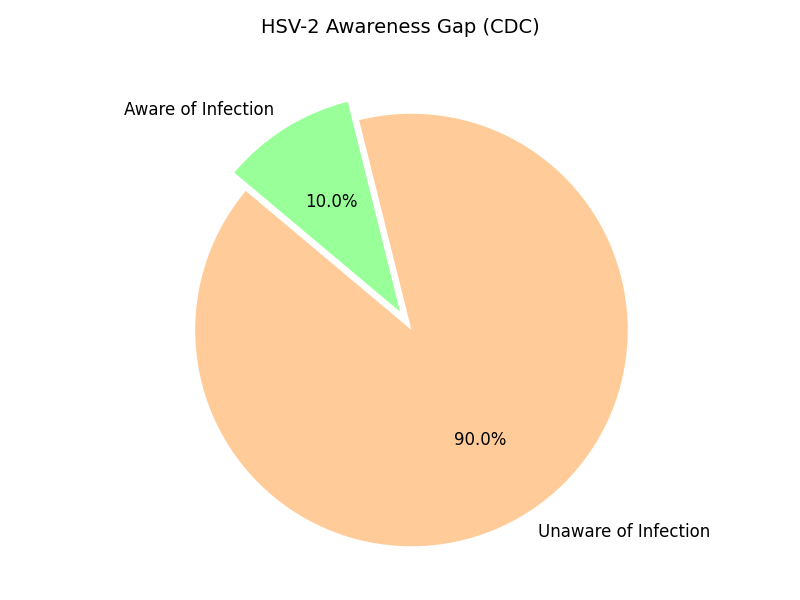
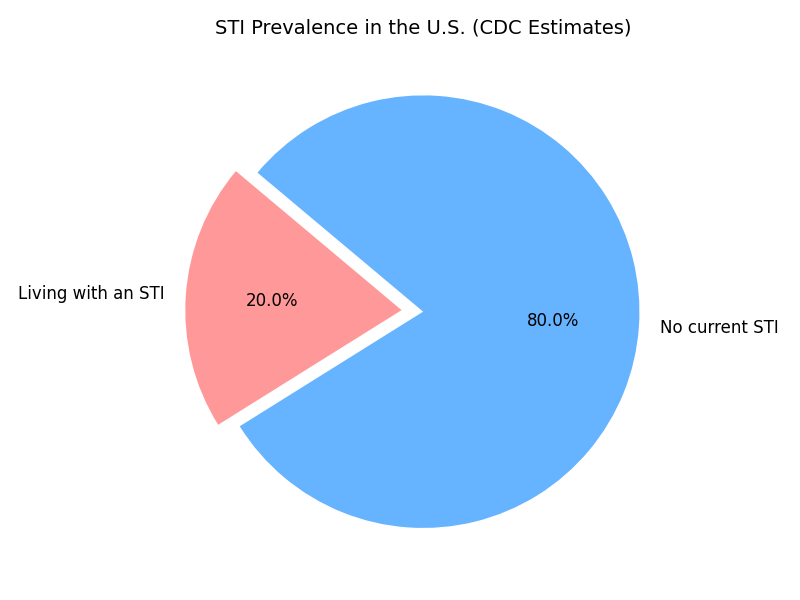
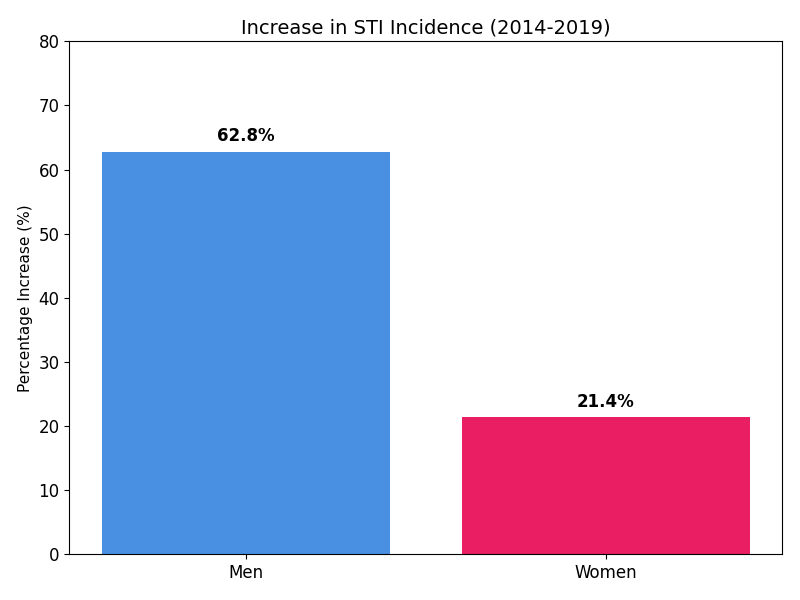
To understand why STD testing and dating are so inextricably linked in 2026, we must first look at the hard data. The following charts illustrate a reality that is often invisible to the naked eye: a dating landscape where infections are more common, rising faster, and staying more hidden than most of us realize.
These visualizations bridge the gap between “what we assume” and “what is actually happening” in our communities. By breaking down the prevalence, the rapid shifts in incidence, and the staggering awareness gap—particularly concerning HSV-2—these figures move the conversation beyond stigma and into the realm of informed health.
As you review these data points from the CDC and Arizona State University, remember that they are not meant to inspire fear, but to provide the clarity needed to date with genuine confidence and respect.
Why Testing Before Dating Is an Act of Confidence, Not Fear
The cultural framing of STD testing tends to position it as reactive — something you do when you’re worried, when you’ve been exposed, when something has already gone wrong. That framing is both inaccurate and counterproductive.
The people who test regularly before new relationships aren’t the anxious ones. They’re the ones who’ve decided that honesty with themselves and their partners is the baseline of how they date — not a special effort, not a sign of distrust, just the way they operate. And that shift — from “testing because I’m scared” to “testing because I respect myself and the people I date” — changes everything about the experience.
Dr. Edward W. Hook III, professor of medicine and epidemiology at the University of Alabama, puts it plainly: “Getting tested is not a matter of distrust — it’s a matter of respect for one another. It allows people to enter the relationship with confidence.” That confidence — knowing your status, speaking honestly about it, entering intimacy without the background anxiety of the unknown — is something you simply cannot have without testing.
How Often Should You Actually Get Tested?
There’s no single answer that applies to everyone, but the CDC and sexual health professionals have given clear guidance based on your situation.
| Your Situation | Recommended Testing Frequency |
|---|---|
| Sexually active adults (general) | At minimum annually; ideally before each new partner |
| Multiple partners or casual dating | Every 3–6 months |
| Starting a new relationship | Before becoming sexually active — both partners |
| Women under 25, sexually active | Annually for chlamydia and gonorrhea at minimum (CDC guideline) |
| Men who have sex with men (MSM) | Every 3–6 months for HIV, syphilis, gonorrhea, chlamydia |
| Symptoms or known exposure | Immediately — don’t wait for the next scheduled test |
| Monogamous relationship (both tested) | Annual screening generally sufficient |
What Should a Standard Panel Include?
A basic STD panel typically covers chlamydia, gonorrhea, syphilis, HIV, and hepatitis B and C. Herpes is not included in most standard panels unless you specifically request it or have symptoms, because both HSV-1 and HSV-2 are so prevalent that routine screening has limited public health benefit beyond individual knowledge. If you want a herpes-specific test, ask for a type-specific IgG blood test that distinguishes HSV-1 from HSV-2. Understanding what each result means is important — our guide to HSV-1 vs HSV-2 dating differences explains the practical implications for your relationships.
BraveMatchs STD Testing Day — Know Your Status, Own Your Story
BraveMatchs has launched its STD Testing initiative to make testing more affordable, accessible, and — most importantly — normal. Whether you need help finding a clinic near you, want to understand your results, or are looking for a community that won’t judge you for asking, this is where that conversation starts. Testing is not a last resort. It’s the first step toward dating with real confidence.
The “Window Period”: Timing Your Test for Accuracy
A common mistake in dating is getting tested the morning after a possible exposure and assuming a negative result means you’re “all clear.” In reality, testing is about timing. Every infection has a “Window Period”—the time it takes for your body to produce enough antibodies or for the pathogen to reach detectable levels.
If you test too early, you may receive a false negative. Here is the 2026 clinical standard for testing windows:
| STI Type | Recommended Testing Window | Notes |
| Chlamydia / Gonorrhea | 1 – 2 Weeks | Can be detected in 7 days, but 14 days is most accurate. |
| Syphilis | 3 – 6 Weeks | Often requires a follow-up test at 90 days for total certainty. |
| HIV (4th Gen Test) | 18 – 45 Days | Modern blood-draw tests are highly accurate by day 23. |
| Herpes (HSV-1/2) | 3 Weeks – 3 Months | IgG blood tests rely on antibodies; 12 weeks is the “gold standard.” |
| Hepatitis B / C | 1 – 3 Months | Long window period; best confirmed at the 3-month mark. |
Expert Tip: If you think you’ve had a high-risk exposure, don’t wait. Test immediately to rule out pre-existing infections, and then schedule a follow-up test after the window period has passed to confirm your current status.
How to Navigate STD Testing and Dating Conversations
This conversation makes people uncomfortable in a way that’s completely out of proportion to how straightforward it actually is. Most of that discomfort comes from framing: people worry it will sound like an accusation, a sign of distrust, or an implication that the other person has been careless. None of that needs to be the case.
Frame it as mutual, not investigative
The version that lands best sounds something like: “Before we take things further, I’d love for us both to get tested — I do it with new partners as a matter of course. It just takes the uncertainty out of things for both of us.” This positions testing as something you do, not something you’re asking them to do because you suspect them.
Timing matters
The right window is before physical intimacy, not in the heat of the moment. A relaxed, private conversation — the kind you might have over dinner when things are clearly heading somewhere — is the natural place for it. Most people who are approached this way are quietly relieved by the directness.
What if they push back?
Someone who reacts to a calm, respectful request for mutual STD testing with defensiveness or refusal is giving you important information about how they approach their own health and the health of the people they sleep with. That’s information worth having before intimacy, not after.
The Scripts: How to Actually Start the Conversation
Knowing you should talk about it is one thing; knowing what to say is another. Use these templates to make the conversation feel like a natural part of getting to know someone, rather than a clinical interrogation.
Scenario A: Via Text (Low Pressure)
Best used after a few dates but before you’ve planned a night in.
“I’ve been having such a great time with you. Before we take things to the next level physically, I wanted to be open—I recently updated my STD status and I’m all clear. Is that something you’ve done lately? I’d love for us both to feel 100% safe and relaxed.”
Scenario B: In Person (The Mature Approach)
Best used during a relaxed moment, like a walk or after dinner.
“I have a personal rule to talk about sexual health before I get intimate with someone new. It’s not about a lack of trust—it’s just how I respect myself and my partners. When was the last time you had a full panel done? Maybe we can both get a fresh screen this week so we have that peace of mind.”
Scenario C: Disclosure (The BraveMatchs Way)
If you are already living with a manageable condition like HSV.
“I really value the honesty we have, so I want to share something: I test positive for [HSV-2/etc.]. I manage it with [daily antivirals/precautions], and the risk of transmission is very low, but I want you to have all the facts. I’m happy to answer any questions you have or share some resources if you want to learn more.”
After the Results: Two Paths Forward
Your test results will put you somewhere on one of two paths. Both have a clear way forward.
Your Results Are Negative
You now have something real to bring into a new relationship: a current, confirmed negative status. This doesn’t mean testing is done — it means you’ve established a baseline. Continue testing at the appropriate frequency for your dating life, and discuss testing openly with new partners before intimacy. Negative results, shared honestly, are a foundation of trust.
You Test Positive for Something
Receiving a positive result is not the end of your story, nor is it the end of your romantic future. In the modern landscape of STD testing and dating, a diagnosis is simply a new piece of information—one that millions of people use to build healthier, more transparent, and deeply fulfilling relationships.
Many STIs are completely curable with a simple course of treatment, and even chronic conditions like herpes are highly manageable with modern medicine and clear communication. The fear often stems from stigma, not medical reality. By choosing to know your status, you are reclaiming your power. You are moving away from the “anxiety of the unknown” and toward a life where your intimacy is built on a foundation of radical honesty and self-respect.
Making STD Testing a Normal Part of How You Date
The goal is not to make STD testing a dramatic event in your dating life. It’s to make it as routine as any other part of taking care of yourself — like an annual physical or a dental checkup.
Build it into your calendar, not your anxiety
Set a recurring reminder — annually at minimum, quarterly if you’re more active. Treat it as logistics, not as a reaction to fear. The more routine it becomes, the less charged it is, and the easier it becomes to talk about honestly with someone new.
Choose platforms that build honesty in from the start
The rising prevalence of STIs in the dating app era is partly a consequence of platforms that make it easy to connect and harder to have honest health conversations. BraveMatchs takes the opposite approach — by building a community specifically for people living with herpes and other STDs, the honesty that mainstream apps make awkward becomes the baseline. Everyone has already made the decision to know their status and be transparent about it. That’s a different kind of foundation entirely.
As part of its STD Testing initiative, BraveMatchs is actively working to make testing more affordable and accessible for its members — and to normalise open, stigma-free conversations about sexual health across the community. The goal isn’t just to help people find a test. It’s to build a culture where knowing your status is something to be proud of, not something to hide — and where that transparency becomes the foundation of every new connection.
Know that your status does not define your worth
This is the piece that matters most and gets said least. A positive STD result is a piece of medical information. It is not a character assessment, a moral judgment, or a verdict on what kind of relationship you deserve. People with herpes, HPV, HIV, and every other STD are in loving, committed, thriving relationships right now — across the US, Canada, Australia, and everywhere else. The difference between the people who find those relationships and those who don’t isn’t their status. It’s whether they decided to stop hiding from their own health and start building something honest.
Frequently Asked Questions About STD Testing and Dating
How often should I get tested for STDs if I am active in the dating scene?
If you are navigating STD testing and dating with multiple partners, medical experts recommend getting tested every 3 to 6 months. For those in long-term monogamous relationships, an annual screening is generally sufficient, provided both partners were tested before the relationship began.
Does a standard 10-panel STD test include Herpes?
No, a standard STD panel usually does not include testing for HSV-1 or HSV-2 unless you specifically ask for it or have an active blister. To know your status without symptoms, you must specifically request a type-specific IgG blood test from your healthcare provider.
When is the best time to talk about testing with a new partner?
The best time to discuss STD testing and dating boundaries is before any physical intimacy occurs, during a calm and private moment. Bringing it up early removes the pressure of the “heat of the moment” and allows both partners to make informed, respectful decisions about their health.
How long is the window period for a Herpes blood test?
The window period for an HSV IgG blood test is typically 3 weeks to 3 months. While some people develop detectable antibodies sooner, waiting 12 weeks after a potential exposure provides the most accurate result (detecting over 92% of infections).
The Bottom Line
STD testing and dating don’t sit on opposite sides of a conversation — they belong in the same one. Knowing your status is not something the especially cautious do. It’s the baseline of honest, adult dating. It’s how you protect yourself, how you respect the people you’re intimate with, and how you enter every new connection from a place of clarity rather than anxiety.
Whatever your results are, there is a path forward. Negative: keep going, test again, build on honesty. Positive: take it one step at a time, get informed, and find a community that already understands — because that community exists, and it is larger than you think.