

Introduction
There’s a moment most women describe the same way. You’re sitting in a doctor’s office, or scrolling through a test result on your phone, and the word “herpes” lands in your life at 43, or 47, or 52 — and your first thought, after the shock, is something like: Of all the times for this to happen. Right now, when I was finally starting to figure things out. If that’s where you are, the thing worth saying first is this: herpes dating for women over 40 is not a consolation prize. It is not settling for less. It is, for many women, the first time they enter a dating life that is built entirely on honesty — and that turns out to be a significant upgrade. This guide is not going to tell you to “stay positive” in the abstract. It’s going to tell you what’s actually true, what’s actually different about dating at this age with this diagnosis, and what works.
- You Are Not an Outlier — The Numbers
- What Perimenopause Actually Does to Herpes
- The Advantages Nobody Talks About
- The Disclosure Conversation After 40
- Where to Actually Meet People
- FAQ
You Are Not an Outlier — The Numbers
The first thing that tends to happen after a herpes diagnosis at this life stage is isolation — the feeling that this happened to you specifically, and that everyone around you is sailing through midlife untouched. Neither of those things is true.
Isolation is a common first reaction, but global data from the World Health Organization (WHO) tells a different story. You are part of a massive, albeit often invisible, community.
1. The Global Reality
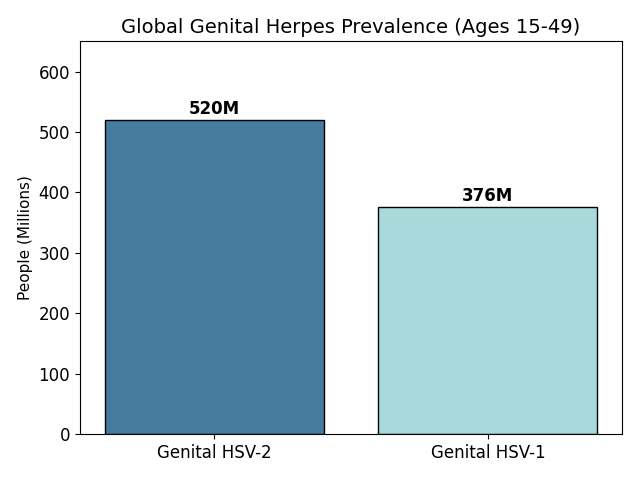
Recent research published in Sexually Transmitted Infections (2025) and supported by WHO global estimates confirms that herpes is far from rare:
846 Million+: People aged 15–49 globally live with genital HSV (Type 1 or 2).
1 in 5: The ratio of adults in your age group navigating this reality.
2. Biology, Not Behavior
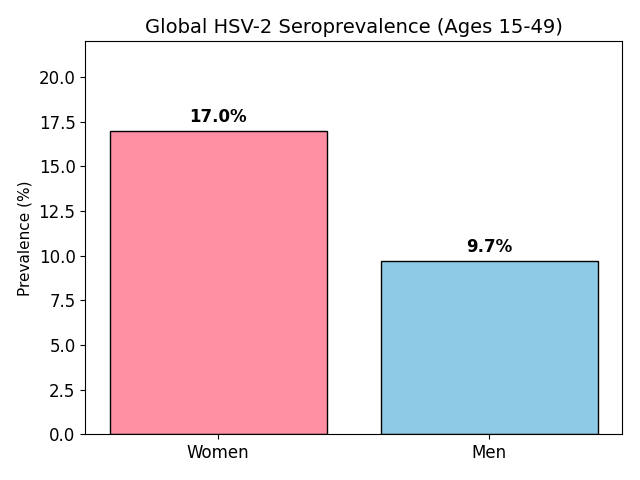
WHO (2020) data confirms women are disproportionately affected due to biology, not “carelessness”:
17% of women carry HSV-2, compared to 9.7% of men.
Reason: Male-to-female transmission is biologically more efficient. You aren’t “irresponsible”—you are simply part of a significant biological statistic.
3. A Massive Dating Pool
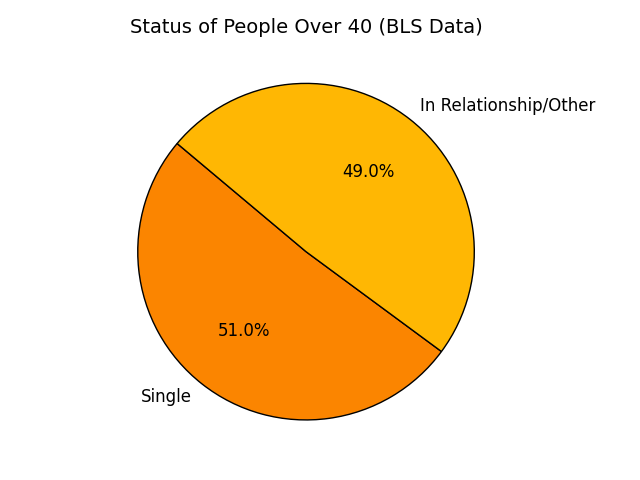
You aren’t entering a thinned-out market. Bureau of Labor Statistics (BLS) and recent 2024 dating data show:
51% of adults over 40 are single.
75% of internet users over 30 are active on dating platforms.
Psychological Edge: Research in Conscious Relationship Design (2025) suggests that at 40, women trade “dating anxiety” for “genuine choice” and stronger self-identity.
These numbers aren’t meant to minimise what you’re feeling. They’re meant to reframe it. You are not a statistic who slipped through the cracks. You are part of an enormous, largely invisible community of women who are navigating exactly what you’re navigating — and most of them are doing it better than they expected.
What Perimenopause Actually Does to Herpes — And What to Do About It
This is the section most articles completely skip. If you’re in your 40s or early 50s and have noticed changes in your HSV — more frequent outbreaks, different-feeling symptoms, or a pattern that’s shifted — the reason may be hormonal rather than anything to do with your overall health declining.
The Halle Berry moment that opened a conversation
In 2023, Halle Berry disclosed that she had been misdiagnosed with herpes by a doctor who didn’t recognise that her symptoms — intense pain after sex, skin sensitivity — were actually caused by vaginal dryness from perimenopause. Both she and her partner subsequently tested negative. Her story went viral not because it was shocking, but because it resonated: millions of women in their 40s are navigating a body that is changing in ways their doctors sometimes don’t prepare them for.
Estrogen decline and HSV reactivation
Research confirms that as estrogen levels fall during perimenopause, several things happen that are directly relevant to women living with herpes:
- Immune suppression: Lower estrogen weakens the immune system’s ability to suppress HSV reactivation. Women who had infrequent or no outbreaks for years may find they recur during perimenopause — not because anything is fundamentally wrong, but because hormonal fluctuation is a known viral trigger.
- Stress amplification: Research shows that declining estrogen disrupts the body’s ability to manage stress effectively — and stress is the most commonly cited HSV trigger. The anxiety, sleep disturbance, and mood changes of perimenopause can create a cycle: more stress, more outbreaks, more stress about outbreaks. Understanding this cycle is the first step to interrupting it.
- Skin changes: As Dr. Jessica Shepherd, chief medical officer of Hers, explains: “As estrogen levels decline after 40, skin has difficulty retaining moisture and collagen production diminishes, leading to slower wound healing.” Thinner, drier skin — including vaginal tissue — is more prone to micro-tears that can increase HSV transmission risk and make outbreaks feel more pronounced.
Understanding this isn’t about adding another thing to worry about. It’s about having an accurate explanation for what your body is doing — which is far better than the alternative of feeling like things are randomly getting worse.
Ask Your Doctor: A Conversation Guide for Midlife HSV Management
Navigating health changes after 40 requires a proactive approach. Use these specific questions during your next appointment to ensure your doctor is looking at the full picture of both your hormonal health and HSV management:
On Hormonal Links: “I’ve noticed a change in my outbreak frequency/intensity recently. Could these fluctuations be linked to my declining estrogen levels or perimenopause?”
On HRT (Hormone Replacement Therapy): “If we consider Hormone Replacement Therapy to manage my menopause symptoms, how might stabilizing my hormones affect my HSV suppression?”
On Suppressive Therapy: “Given the natural changes in immune response and skin thinning at this stage of life, am I a good candidate for daily suppressive therapy (like Valacyclovir) to reduce both symptoms and transmission risk?”
On Topical Relief: “Are the symptoms I’m feeling (itching or sensitivity) definitely an HSV outbreak, or could they be related to vaginal atrophy or dryness? Should we explore estrogen creams alongside my antiviral protocol?”
On Immunity: “Are there specific lifestyle adjustments or supplements you recommend for a woman in her 40s to support the immune system against viral reactivation?”
The Advantages Nobody Talks About
Nearly every article written for women navigating herpes dating over 40 focuses solely on the challenges. Very few talk honestly about what this age group actually has going for it — and those advantages are real, documented, and directly relevant to successful herpes dating.
“Women in their 40s tend to be more self-aware and confident in what they want in a partner. They are upfront about their needs, priorities, and deal-breakers.” — Dating researcher Yasmín del Rosario, 2025
You know what you actually want
By 40, most women have been through enough relationships to understand — with genuine precision — what works for them and what doesn’t. A herpes diagnosis adds one more dimension of clarity: you need a partner who responds to honest information with maturity and care. That’s a filter, not a liability. It removes people who were wrong for you anyway.
You won’t waste time on the wrong fit
Younger daters often stay in relationships too long, out of loneliness or uncertainty. Women over 40 have generally outgrown that. If someone responds badly to your disclosure, you have the life experience to understand that this is information, not rejection. It tells you something true about that person, faster than anything else could.
The conversation lands differently
Partners in the 40s and 50s have generally had more experience with complex health conversations — their own or someone they’ve loved. They are, on average, more measured in their response than a 27-year-old might be. The disclosure conversation that feels terrifying in the abstract often turns out to be much more manageable than expected when both people are genuinely adults.
You’re freed from the fear of pregnancy
One of the underlying anxieties in younger women’s dating lives — about contraception, about what an HSV diagnosis means for future fertility or pregnancy — simply doesn’t apply in the same way in your 40s and beyond. Intimacy can be approached on different terms entirely.
Sexual satisfaction often improves in midlife
Research, including a UK national survey, found that many women in midlife — freed from various pressures of younger years — experience a genuine increase in sexual confidence and satisfaction. A herpes diagnosis doesn’t change that. Managed well, it can deepen intimacy by requiring the kind of honesty that actually makes sex better, not worse.
The Disclosure Conversation After 40 — What Actually Works
For many women, dating after divorce with herpes feels like navigating a double-edged sword of vulnerability. Whether you’re re-entering the scene after a long marriage or dealing with a new diagnosis in midlife, the disclosure conversation is often the hurdle that feels the highest.
Settle your own position first
The most important variable in any disclosure conversation is not the words you use — it’s how settled you are when you say them. A woman who has done the reading, understands her HSV type, knows her transmission risk profile, and has had time to reach a place of genuine equanimity will consistently have better disclosure conversations than someone still in crisis mode, regardless of age. For women over 40, getting to that settled position often happens faster — because the life skills that help you process difficulty are already developed.
If you’re still in the raw early phase of a diagnosis, our guide to what to do after testing positive for herpes is the right starting point before you think about dating at all.
The timing that works
The window most women over 40 find effective is between the second and fourth date — after genuine connection has formed, but before any physical line has been crossed. At this life stage, directness is respected more than it is at 25. A clear, calm statement of the facts — your HSV type, whether you’re on suppressive therapy, what that means for transmission risk — delivered without excessive apology, lands well.
You are not confessing. You are sharing information that a person who cares about you has every right to have. Frame it that way.
What to do with rejection
It will occasionally happen. At this age, you have the emotional resources to handle it — and to recognise it for what it is: one person’s comfort level, not a verdict on your worth or your future. Research consistently shows that HSV-related rejection happens far less often than people fear, and that the people who stay after hearing the disclosure tend to be the better partners anyway.
What to Actually Say: Disclosure Scripts for the Modern Woman
The beauty of dating in your 40s is that you no longer need to “confess.” You are simply sharing health information. Here are three ways to frame the conversation, depending on your comfort level and the vibe of the relationship:
Option A: The Direct & Confident Approach (Best for a 3rd or 4th date)
“I’ve really been enjoying getting to know you, and before we take things to a more physical level, I want to be upfront about my sexual health. I carry the virus that causes herpes (HSV). I manage it with [daily medication/lifestyle], and the risk of passing it on is very low, but I believe in starting things with total honesty. How do you feel about that?”
Option B: The “Values-Based” Approach (Focuses on maturity and trust)
“One thing I’ve learned by this stage of life is that clear communication is everything. I wanted to let you know that I tested positive for HSV-2 a while ago. It’s a minor skin condition for me, but I take my partner’s health seriously. I’m happy to answer any questions you have or share some facts about how I keep things safe.”
Option C: The Text-Based Approach (If you prefer to give them space to process)
“I had a great time with you tonight. Since we’re getting closer, I wanted to share something personal before our next date. I have HSV (the virus that causes cold sores/genital herpes). It doesn’t impact my daily life much, but I wanted to give you the info so you can make an informed choice. I’m an open book if you want to chat about it!”
Where to Actually Meet People
Women over 40 dating with herpes have more options than they did even five years ago — and the quality of those options has improved significantly.
Dedicated HSV dating communities
For many women navigating herpes dating at this life stage, the most practical first move is a platform where the disclosure conversation has already happened in the most important sense — because everyone there already understands. BraveMatchs is built specifically for this: a community for HSV and STD-positive singles where the first date can just be about whether you actually like each other, rather than managing someone else’s reaction to a piece of your medical history.
Mainstream apps — when you’re ready
Mainstream platforms work too. While there are plenty of general dating apps for 40 plus individuals, like Hinge or Bumble, the experience changes when you have to manage disclosure. These apps skew toward intentional users, which suits the priorities of women in their 40s and 50s.Plenty of Fish has a large user base in Canada and the US among this age group. The trade-off is that you’re managing the disclosure conversation independently, without the structural support of a community that already understands.
Many women find the most effective pattern is to start on a dedicated platform — to rebuild confidence, practise disclosure conversations in a lower-stakes environment, and reconnect with their own desirability in a community that reflects it back clearly — and then move to mainstream apps when they’re ready.
FAQ About Herpes Dating for Women Over 40
Does perimenopause make herpes worse?
Hormonal changes don’t make the virus stronger, but declining estrogen can weaken immune suppression, leading to more frequent outbreaks. Additionally, perimenopause causes skin thinning and increased stress, which are known triggers. These changes are addressable through medical management, such as suppressive therapy or hormonal support.
Is herpes dating harder after 40?
While midlife brings unique challenges like perimenopause or re-entering the dating pool, the emotional advantages are significant. Women over 40 typically possess greater self-knowledge and lower tolerance for the wrong fit. This maturity often leads to relationships that are more honest and satisfying than those in younger years.
When should I tell someone I have herpes?
Ethically and legally, disclosure must happen before any sexual contact. For women over 40, the “sweet spot” is usually between the second and fourth date. This timing allows for a genuine connection to form while ensuring a calm, pressure-free environment for an adult conversation about health and boundaries.
Does having HSV-1 or HSV-2 make a difference when dating over 40?
Yes — and understanding which type you have is worth the effort. Genital HSV-1 typically recurs far less often than HSV-2, with shedding that declines significantly over the first year and continues to fall. Genital HSV-2 has a more persistent shedding profile and is more consistently managed with suppressive therapy. These are real differences that shape both your disclosure conversation and your daily management. Our guide to HSV-1 vs HSV-2 dating differences covers the specifics in full.
What is the best platform for herpes dating for women over 40?
Specialized communities like BraveMatchs are ideal for building confidence since the disclosure hurdle is removed from the start. For those ready for mainstream platforms, Hinge and Bumble have strong, relationship-oriented user bases in the 40+ demographic. Many find that starting with a dedicated community provides the best foundation.
One More Thing Worth Saying
The women who navigate this best aren’t the ones who were somehow blessed with unusual resilience. They’re the ones who stopped believing that a herpes diagnosis made them less — and started understanding that it made them more honest, more intentional, and more capable of the kind of relationship that actually holds up over time.
At this stage of life, you’ve already proved you can handle hard things. This is one more hard thing that most people handle better than they expected. And the relationships that come out of dating with that kind of honesty — at 43, at 48, at 55 — tend to be the ones worth having.